Luxury interior design is becoming less about visual extravagance and more about how a space makes people feel. Homeowners, architects, and hospitality designers are embracing rooms that encourage calm, comfort, and sensory connection. At the center of this movement is one of the most captivating wellness-design trends: indoor water features.
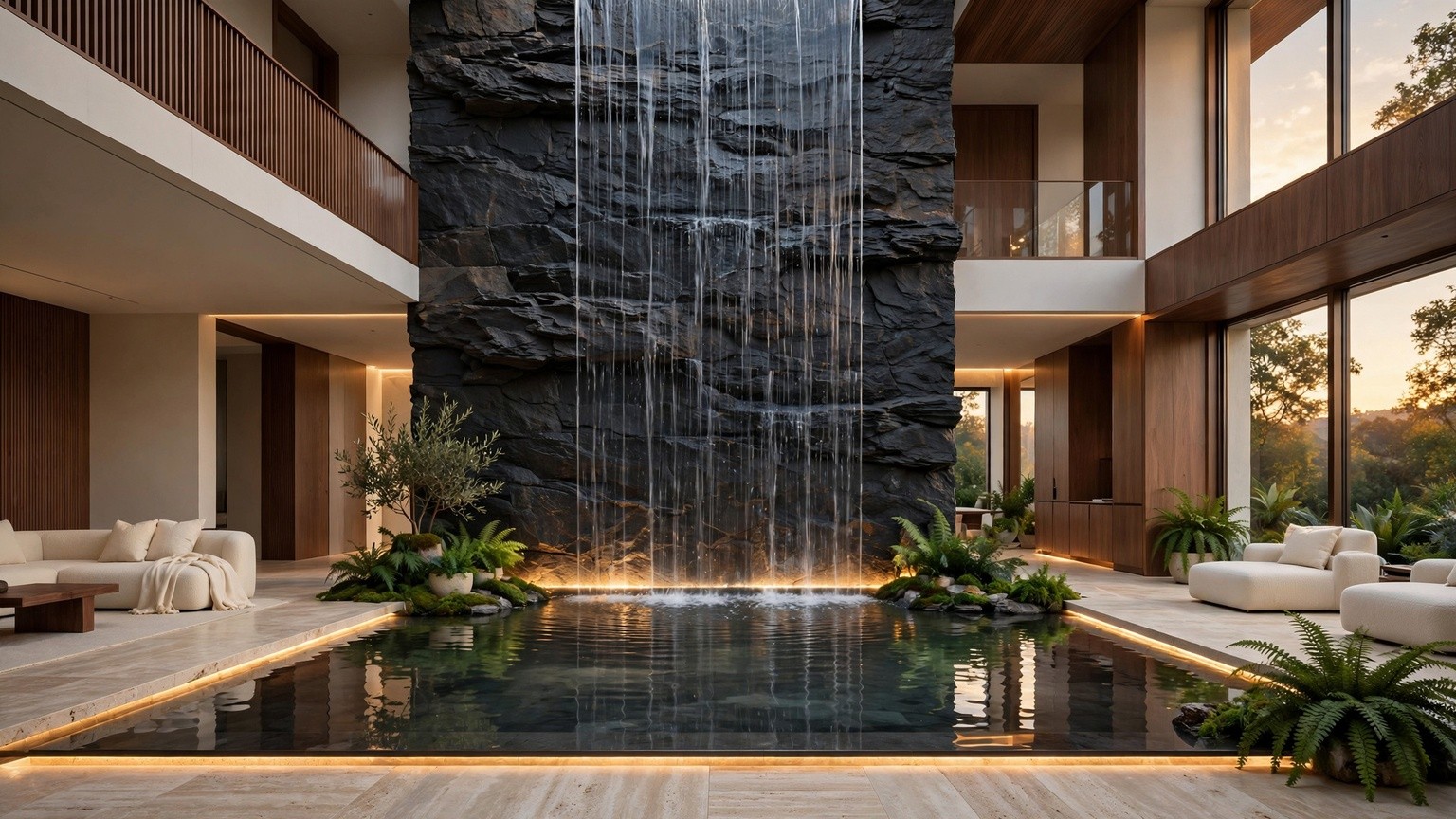
From slim wall cascades in contemporary entryways to illuminated reflection pools beside lounge areas, water is being used as both architecture and art. Warm LED strips, natural stone, textured walls, and carefully controlled water flow create an atmospheric experience that feels private, restorative, and quietly luxurious.
This approach reflects the rising popularity of biophilic interior design, which brings elements of nature into built environments. When thoughtfully planned, an indoor waterfall or pool can become more than a decorative focal point—it can define the mood of an entire home.
Why Indoor Water Features Are Trending
Today’s interiors are expected to support wellness as well as everyday function. After years of screen-heavy lifestyles and fast-paced routines, many people want their homes to feel like personal retreats. Designers are responding with softer materials, organic forms, greenery, natural light, and moving water.
Water appeals to several senses simultaneously. Its movement provides visual interest, while its sound can soften the atmosphere of a room. Reflections add dimension and interact beautifully with architectural lighting. Even a compact feature can make an interior feel more layered and immersive.
This is especially effective in large luxury spaces, where expanses of stone, glass, and concrete may otherwise feel cold. Flowing water introduces motion and softness without compromising a minimalist design language.
Indoor water elements are also highly adaptable. They can become dramatic centerpieces or subtle background details, depending on the scale, lighting, and sound level.
Meditative Indoor Water Cascades
A wall-mounted cascade is one of the most popular forms of luxury indoor water feature. Water moves down glass, slate, marble, metal, or textured stone before entering a concealed basin. Pumps then recirculate it through a closed system.
The most refined installations use controlled flow to prevent excessive splashing. Rather than creating the roar of a large outdoor waterfall, they produce a gentle, consistent sound suited to relaxation.
Popular locations include:
- Double-height entrance halls
- Living-room feature walls
- Spa bathrooms
- Home yoga and meditation rooms
- Indoor garden courtyards
- Hotel lobbies and wellness centers
- Executive offices and reception areas
A floor-to-ceiling cascade can become an architectural divider, allowing light to pass through while separating two zones. A smaller recessed waterfall may create a calmer statement in a bedroom, study, or private spa suite.
Surface selection influences the feature’s personality. Polished glass produces a sleek contemporary look, while rough stone creates more texture and a nature-inspired effect. Dark granite can look striking under warm light, whereas pale limestone offers a softer, resort-style appearance.
Reflection Pools and Sunken Water Elements
Indoor pools do not always need to be suitable for swimming. Shallow reflection pools are increasingly being used as sculptural design features. Their still surfaces mirror lighting, plants, ceilings, and surrounding architecture, making a room appear deeper and more expansive.
A reflection pool can run beside a hallway, sit beneath a floating staircase, or frame an interior courtyard. Some designs combine a quiet pool with a small spillway, creating a subtle transition between still and moving water.
Sunken features are particularly effective in open-plan homes because they define zones without using walls. A narrow pool placed between a lounge and indoor garden can create a sense of separation while preserving visual continuity.
Safety must remain a priority. Edges should be clearly visible, walkways must be slip-resistant, and the layout should reduce the chance of accidental falls. Homes with children, older residents, or pets may require protective barriers, raised basins, covered channels, or alternative wall-mounted designs.
Warm LED Lighting Creates the Mood
Lighting transforms water from a daytime design element into an atmospheric evening feature. Warm LED strip lighting is especially popular because it produces a gentle glow and can be concealed beneath ledges, behind stone panels, or around the perimeter of a pool.
Color temperature has a major impact. Warm-white lighting generally creates an intimate, spa-like mood, while cooler tones can feel crisp and futuristic. Amber accents pair beautifully with bronze, wood, travertine, and dark stone.
Common lighting techniques include:
- Underlighting a waterfall basin
- Backlighting textured glass
- Installing strips beneath floating pool edges
- Grazing stone walls to emphasize texture
- Illuminating stepping platforms
- Highlighting nearby greenery
- Creating reflections across ceilings and walls
Dimmable controls allow the feature to shift with the time of day. Brighter settings can highlight architecture during gatherings, while lower illumination creates a meditative atmosphere at night.
All electrical components near water must be appropriately rated and professionally installed. Waterproofing, safe voltage selection, driver placement, ventilation, and access for maintenance should be integrated into the design from the beginning.
The Connection Between Water and Biophilic Design
Biophilic design seeks to strengthen the relationship between people and nature. It may incorporate plants, daylight, natural materials, outdoor views, organic shapes, and water.
An indoor cascade becomes more convincing when it is part of a broader natural composition. Ferns, moss, tall grasses, and tropical plants can soften hard edges, while stone and timber establish an earthy material palette.
Designers often position water near skylights or large windows so daylight moves across the surface. As conditions change, the feature looks different throughout the day. This variation gives the room a dynamic quality that static decoration cannot easily achieve.
Water should not be promoted as a cure for stress or medical conditions. However, many people find its appearance and gentle sound calming. Its wellness value is strongest when combined with comfortable seating, controlled lighting, good ventilation, acoustic balance, and an uncluttered layout.
Best Materials for Indoor Water Installations
Material selection affects durability, maintenance, sound, and appearance. Natural stone remains a favorite because every slab has distinct veining and texture. Granite, slate, marble, and travertine can all create sophisticated results, although each requires suitable sealing and care.
Glass is ideal for modern interiors. It allows designers to create transparent partitions, rain curtains, and smooth vertical cascades. Stainless steel offers a clean, architectural finish and is often used in contemporary commercial spaces.
Other options include engineered stone, sealed concrete, ceramic tile, and marine-grade metal. Materials must be selected for continuous moisture exposure rather than appearance alone. Ordinary wall finishes may stain, swell, corrode, or encourage mold growth.
The surrounding flooring should also be water-tolerant and slip-resistant. Porcelain tile, textured stone, and certain sealed surfaces may work well when correctly specified.
Water Quality, Humidity, and Maintenance
A beautiful indoor feature requires consistent maintenance. Recirculating systems can collect dust, oils, algae, and mineral deposits. Pumps, filters, reservoirs, and nozzles must remain accessible for inspection and cleaning.
Water quality is particularly important in illuminated features because scale and cloudy water become highly visible. Depending on the system, treatment may involve filtration, approved water conditioners, ultraviolet sanitation, or periodic replacement. A specialist should recommend a suitable method based on the materials and intended use.
Humidity must also be managed. A large cascade or warm indoor pool can add moisture to the air, potentially leading to condensation and mold if ventilation is inadequate. Proper waterproofing, drainage, mechanical ventilation, and dehumidification may be necessary.
Additional maintenance tasks can include:
- Cleaning glass and stone surfaces
- Removing debris from reservoirs
- Checking pump performance
- Inspecting seals and waterproof membranes
- Replacing filters
- Examining LED components
- Monitoring water levels
- Checking for leaks or unusual sounds
Low-splash designs and appropriately sized pumps generally require less work than highly turbulent installations.
Small-Space Indoor Water Feature Ideas
The trend is not limited to large villas or commercial spas. Compact homes can incorporate water through carefully scaled designs.
A tabletop fountain can add movement to a reading corner or home office. A slim vertical panel may fit in an entryway without consuming much floor space. Built-in wall niches can hold ceramic spill bowls or miniature cascades.
In small rooms, sound control is essential. A pump that seems quiet in a showroom may be noticeable in a bedroom or study. Choose adjustable-flow equipment and test the feature under realistic conditions.
Avoid overcrowding the display with decorations. One sculptural vessel, a restrained plant arrangement, and a warm spotlight may create a stronger result than numerous competing elements.
Smart Technology and Custom Controls
Smart-home integration is making indoor water installations easier to manage. Timers can activate the pump during specific hours, while mobile controls may adjust lighting, flow, and operating schedules.
Water-level sensors can protect pumps from running dry. Leak-detection devices may alert homeowners to potential problems, and automated filtration can reduce routine maintenance. Some advanced systems coordinate water movement and lighting with preset relaxation scenes.
The best smart features are practical rather than gimmicky. Reliable shutoff controls, leak monitoring, and accessible maintenance reminders offer more long-term value than complicated visual effects.
Planning a Safe and Successful Installation
Indoor water features should be designed with architects, waterproofing specialists, electricians, plumbers, and ventilation professionals. Retrofitting a large cascade without evaluating structural loads, drainage, electrical safety, and humidity can result in expensive problems.
Before construction, consider:
- Available space and structural support
- Desired water sound and flow intensity
- Splash radius and flooring safety
- Access to plumbing and electricity
- Waterproofing and drainage
- Ventilation and humidity control
- Cleaning and servicing access
- Child and pet safety
- Operating costs and energy use
- Emergency shutoff and leak detection
A closed-loop system can reduce water consumption compared with a continuous fresh-water supply. Energy-efficient pumps and LED lights can also control operating costs.
Where Architecture Meets Tranquility
Indoor water features capture the direction of contemporary luxury: immersive, natural, and emotionally engaging. A meditative cascade can soften a dramatic stone wall, while an LED-lit reflection pool can turn an unused transition area into an unforgettable architectural moment.
The most successful installations do not depend on size or spectacle. They balance movement, sound, illumination, materials, safety, and maintenance. Warm lighting adds depth, natural finishes establish calm, and controlled water flow prevents the design from becoming overwhelming.
As wellness-focused interiors continue to evolve, water will remain a powerful tool for creating spaces that feel restorative and distinctive. Thoughtfully integrated, an indoor cascade or pool does more than decorate a room—it changes its rhythm.