Have you ever stepped through your front door, looked around, and felt strangely unsettled—even though nothing was obviously wrong?
The problem might not be your schedule or your mood. It could be your surroundings.
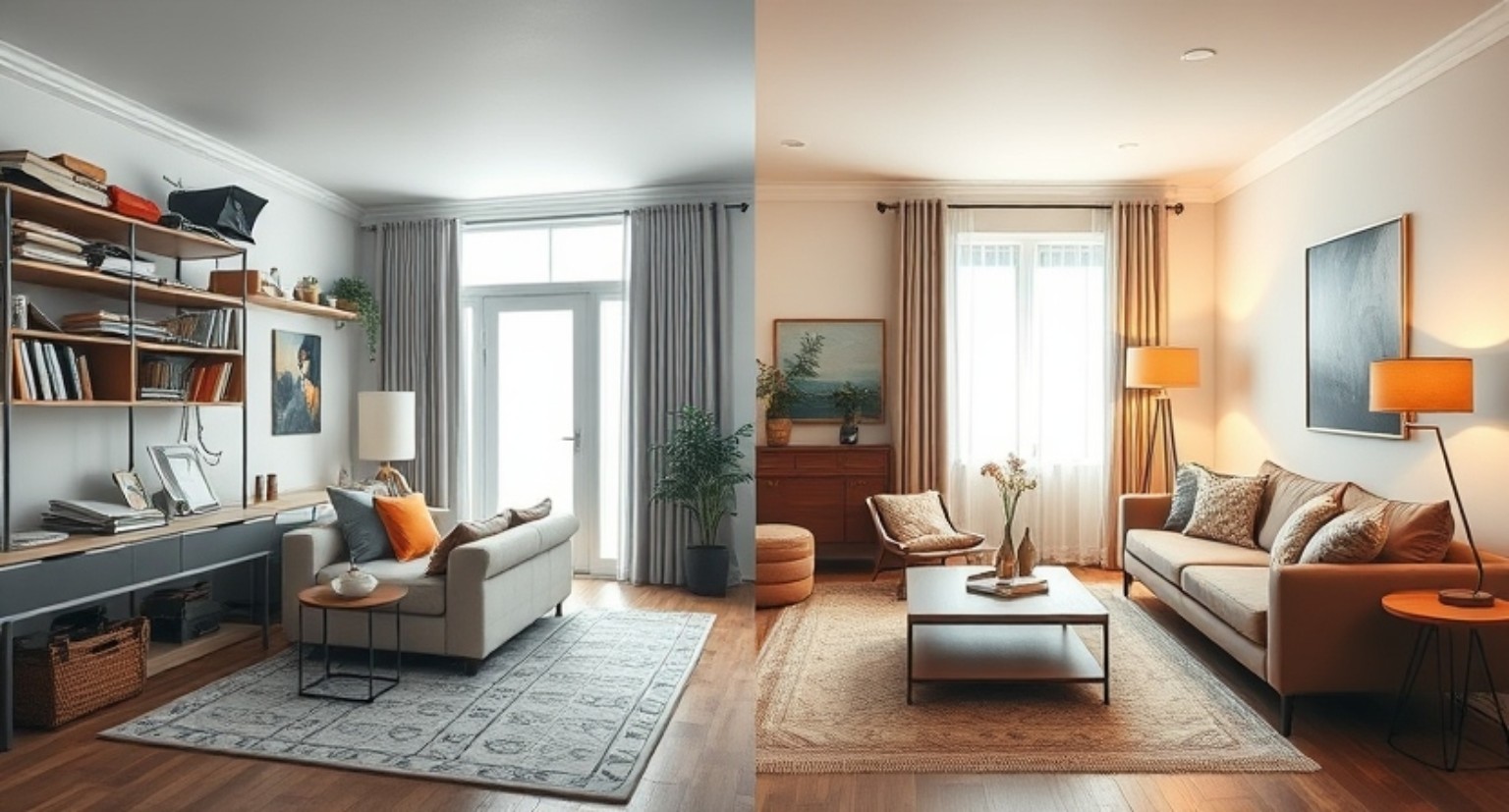
Our homes continuously send signals to the brain. A crowded countertop suggests unfinished work. Harsh lighting keeps the senses alert. Furniture blocking a natural pathway forces the body to make tiny corrections every time someone crosses the room. Individually, these details appear harmless. Together, they can create persistent visual friction.
That does not mean poor décor directly causes an anxiety disorder. Anxiety is complex, and interior design is not a substitute for professional mental-health support. Yet research into environmental psychology suggests that light, noise, organization, color, and spatial layout can influence stress, attention, and emotional comfort.
The surprising truth? Some of the trendiest interior design choices can make daily life feel more demanding. Here are five common design decisions that may be contributing to low-level anxiety—and realistic ways to fix them without renovating your entire home.
1. Open Storage That Turns Everything Into Visual Noise
Open shelving looks beautiful in carefully styled photographs. In everyday life, however, shelves tend to collect mugs, paperwork, chargers, books, medication, toys, half-used candles, and objects no one knows where to put.
The result is not always physical clutter. It is visual clutter—a field of competing shapes, colors, labels, and unfinished tasks. Each item asks for a tiny slice of attention. You may not consciously study every object, but your brain still has to process the scene.
This is why a cluttered kitchen can feel exhausting before you have cooked anything. The counter becomes a reminder board: wash that bottle, file that letter, use those bananas, put away the delivery box. Your room is no longer simply a room. It has become a silent to-do list.
The calming fix
You do not need to embrace extreme minimalism. Begin by reducing what remains visible.
Use closed cabinets for unattractive necessities, place smaller objects inside matching baskets, and leave deliberate empty space between display pieces. On kitchen counters, keep only the appliances used almost every day. Group essentials on one tray so they read as a single visual unit.
Try the “one quiet surface” rule: preserve at least one clear tabletop, countertop, or shelf in each main room. That patch of emptiness gives the eyes somewhere to rest.
The viral design lesson worth remembering is simple: if everything is on display, nothing feels peaceful.
2. Harsh Lighting That Keeps Your Brain in Work Mode
Many homes depend on a single bright ceiling fixture. It illuminates the room, but it can flatten faces, produce uncomfortable glare, and make a relaxing space resemble a waiting room.
Cool, intense lighting can be useful when you need visibility for cooking, cleaning, or detailed work. At night, however, excessive brightness may feel stimulating. Screens, exposed bulbs, and glossy surfaces can add further glare.
Poorly positioned lighting creates another problem: contrast. A bright ceiling light paired with dark corners forces the eyes to adjust repeatedly. This can cause fatigue and make a room feel less inviting.
The calming fix
Build your lighting in layers:
- Ambient lighting provides general illumination.
- Task lighting supports reading, cooking, or desk work.
- Accent lighting adds depth and highlights selected features.
Instead of switching on one powerful overhead light, combine a floor lamp, table lamp, and under-cabinet light. Choose warm illumination in bedrooms and living areas, particularly during the evening. Where practical, install dimmers or use smart bulbs with adjustable brightness.
Pay attention to bulb visibility as well. Shades, diffusers, and frosted glass soften the light and reduce glare. Place reading lamps beside the chair rather than behind your head, where they can create shadows.
One of the easiest relaxing home ideas is also one of the most affordable: turn off the “big light” and use several gentler sources at eye level or below.
3. Furniture Arrangements That Make You Navigate an Obstacle Course
An attractive room can still feel wrong when its layout fights the way people naturally move.
Perhaps the sofa partially blocks the doorway. Maybe the coffee table is close enough to catch your shin. A dining chair must be moved whenever someone opens a cabinet. Every trip across the room requires turning sideways, stepping around an ottoman, or squeezing between furniture.
These tiny inconveniences create repeated moments of physical hesitation. Your body begins anticipating the obstacle before reaching it. Over time, that can make a space feel cramped or irritating—even when it has enough square footage.
A poor layout may also leave people feeling exposed. A chair with its back directly toward an entrance can feel less comfortable than one offering a view of the doorway. This preference is not universal, but many people relax more easily when they can understand the room at a glance.
The calming fix
Observe how you actually move through the space. Do not design solely around symmetry or an online floor-plan trend.
Keep primary walkways clear and provide enough room to open doors, drawers, and cabinets fully. Move occasional furniture out of high-traffic zones. If a table continually collects bruises and complaints, it is probably too large or positioned incorrectly.
Consider where each activity occurs. A reading chair needs light and somewhere to place a drink. An entryway needs an obvious location for shoes, keys, bags, and coats. When the room supports the action, fewer objects end up in random places.
Before purchasing new furniture, mark its dimensions on the floor using painter’s tape. This simple test prevents the classic mistake of buying something that fits technically but overwhelms the space functionally.
Good design should not demand constant negotiation. Your furniture should serve your routine—not interrupt it.
4. Too Many Competing Colors, Patterns, and Décor Themes
Bold design is not inherently stressful. A maximalist room can feel joyful and deeply personal. The problem begins when visual elements compete without hierarchy.
A geometric rug, floral curtains, brightly colored cushions, patterned wallpaper, open shelves, and multiple art styles may all be appealing separately. Combined without repetition or balance, they can create sensory overload.
Color also changes with light. A vivid shade that appears energizing in daylight may feel intense under artificial lighting. Large areas of highly saturated color can dominate the visual field, particularly in small rooms.
On the opposite extreme, an entirely gray or beige interior may feel sterile if it lacks texture, contrast, and personal meaning. Calm design does not require removing personality. It requires creating enough structure for personality to be understood.
The calming fix
Choose a limited base palette, then add smaller accents. A practical formula is to use one dominant color, one supporting color, and one or two accent tones. The numbers matter less than consistency.
Repeat colors and materials across the room. For example, a dark frame can connect with a lamp base, while a green cushion can echo artwork or a plant. Repetition makes variety feel intentional.
If you love patterns, vary their scale. Combine one large pattern with a smaller, simpler design rather than using several equally busy prints. Keep a few areas visually quiet so the statement pieces can stand out.
Most importantly, test paint and fabric samples in the room at different times of day. Never choose a major color based only on a tiny sample under showroom lighting.
The goal is not to create a bland “calm aesthetic.” It is to make a room feel coherent rather than accidental.
5. Designing for Social Media Instead of Real Life
One of today’s most common home décor mistakes is creating a space for photographs rather than daily routines.
A sculptural chair may look impressive but feel uncomfortable. An all-white room may require constant cleaning. A minimalist nightstand may offer nowhere for glasses, water, books, or medication. A trendy kitchen may hide frequently used items so effectively that preparing breakfast becomes irritating.
Then there is trend fatigue. Fast-moving social media constantly announces that certain colors, tiles, furniture shapes, and finishes are “in” or “out.” When your home is built around approval, every new trend can make it feel outdated.
This creates a subtle but relentless form of dissatisfaction. Instead of seeing comfort and memories, you see what needs to be replaced.
The calming fix
Design around your real behavior—not an imagined, more photogenic version of your life.
If you drop your keys by the door, put a tray there. If you enjoy reading in bed, choose a proper lamp and a nightstand with storage. If you have children or pets, select materials that can survive them. If you host guests twice a year but work from home every day, prioritize the workspace.
Before buying anything, ask:
- Does this solve a genuine problem?
- Is it comfortable and easy to maintain?
- Do I like it, or have I simply seen it repeatedly?
- Will it still work when the camera is off?
A home should not behave like a showroom. It should support sleep, concentration, conversation, privacy, creativity, and recovery.
How to Create a Calmer Home Without Starting Over
You do not need a dramatic makeover. In fact, changing too much at once can create more stress. Begin with the area that irritates you most.
Remove ten unnecessary objects. Change one harsh light bulb. Move one table out of a walkway. Create one closed storage zone. Add one personal object that makes the room feel grounded and familiar.
Also consider factors beyond appearance. Persistent noise, uncomfortable temperatures, unpleasant odors, and poor ventilation can affect how a home feels. Soft furnishings may reduce echo, curtains can improve privacy, and opening windows—where safe and practical—may refresh stagnant rooms.
Notice your physical reactions as you move through each space. Where do your shoulders tense? Which surface constantly attracts mess? What do you avoid using? These questions often reveal more than a mood board.
Final Thoughts
The most stressful design choices are rarely dramatic. They are the small frictions repeated every day: the crowded shelf, glaring light, blocked pathway, competing pattern, and beautiful object that does not work.
A calm home is not necessarily neutral, minimalist, expensive, or perfectly organized. It is understandable. Its pathways are clear, useful objects are easy to reach, lighting matches the activity, and decoration reflects the people who live there.
If your home has been making you feel vaguely “off,” do not assume you need new furniture or a complete renovation. Start by reducing visual demands and improving function.
The most powerful interior-design shift may be this: stop asking whether your home looks impressive—and start asking whether it makes everyday life feel easier.