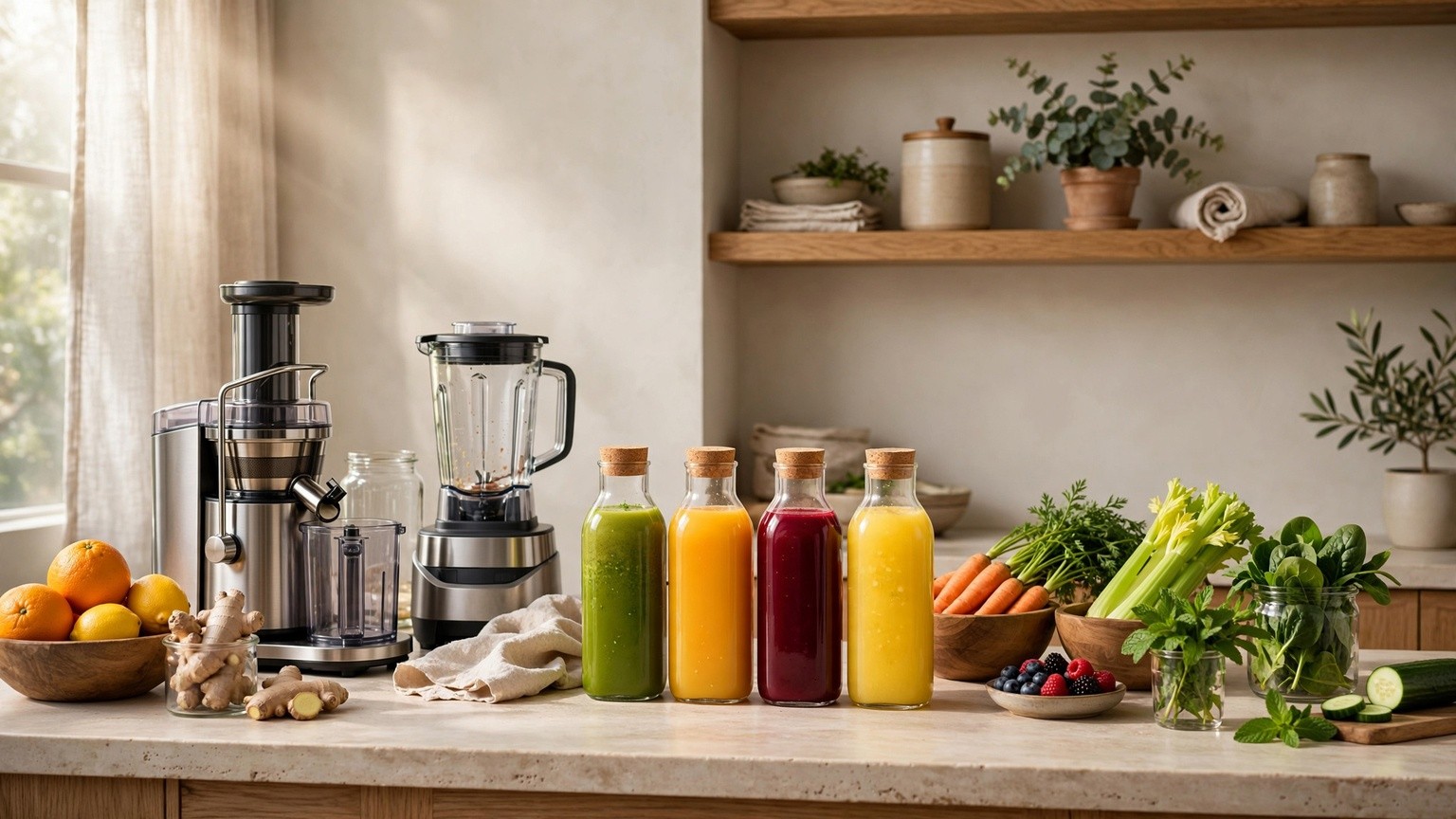
At-home juice bars are becoming a must-have feature in modern kitchens. Combining wellness, convenience, and beautiful interior design, a home juice station creates a dedicated place to prepare fresh juices, smoothies, wellness shots, and nutritious drinks. It can make healthy habits easier while adding a colorful, functional focal point to your kitchen.
You do not need a large house or expensive renovation to embrace this trend. A spare section of countertop, a small kitchen cart, or an unused cabinet can become a practical DIY juice bar. With suitable appliances, smart storage, and fresh ingredients, you can enjoy café-inspired drinks without leaving home.
What Is an At-Home Juice Bar?
An at-home juice bar is a designated area where ingredients, tools, glasses, and appliances are organized for making fresh drinks. Depending on your available space, it may be a simple countertop setup or a custom beverage station with shelving, refrigeration, a sink, and built-in storage.
Unlike a standard coffee corner, a home juice bar focuses on fresh produce and health-conscious beverages. Common menu options include green juice, citrus blends, fruit smoothies, protein shakes, detox drinks, and ginger shots.
Keeping everything in one place makes the process faster and more enjoyable. When your blender, juicer, cutting board, and favorite recipes are easily accessible, you are more likely to maintain a consistent wellness routine.
Benefits of Creating a Home Juice Station
Convenience is one of the greatest benefits of a kitchen juice bar. There is no need to drive to a café or wait for an order. You can prepare a customized drink whenever it fits your schedule.
Making beverages at home can also be more affordable. Store-bought juices and smoothies are often expensive, particularly when purchased regularly. Although a quality juicer or blender requires an initial investment, it may reduce long-term spending.
A personal juice bar also gives you control over ingredients. You can adjust sweetness, avoid unwanted additives, and accommodate dietary preferences. Fresh fruit, vegetables, herbs, seeds, and plant-based milk can be combined according to your nutritional goals and taste.
However, juice should complement a balanced diet rather than replace whole foods. Juicing can remove much of the fiber found in produce, while smoothies generally retain it. Consider rotating between juices and smoothies, and seek professional medical advice if you have specific dietary needs.
Choose the Best Location
Your juice station should be close to a power outlet and preferably near the sink. Juicing involves washing produce, preparing ingredients, and cleaning equipment, so proximity to water makes the process more efficient.
A clear section of kitchen countertop is the easiest option. If counter space is limited, use a rolling cart, bar cabinet, pantry shelf, or compact kitchen island. A mobile cart is ideal for small apartments because it can be moved when necessary.
Before selecting a location, measure the juicer or blender, including the height required to remove lids and containers. Leave enough room for ventilation, preparation, and safe operation. Frequently used appliances should remain accessible, while less-used accessories can be stored in drawers or baskets.
Essential At-Home Juice Bar Equipment
The right equipment depends on the beverages you want to make. A countertop blender is suitable for smoothies, shakes, frozen drinks, and blended juices. It retains the fiber from fruits and vegetables, helping drinks feel more filling.
A centrifugal juicer is generally fast and convenient, while a cold-press or masticating juicer operates more slowly and separates juice from pulp. Compare capacity, noise, cleaning requirements, warranty, and replacement-part availability before making a purchase.
Other useful tools include:
- Sharp knives and a sturdy cutting board
- Citrus press or handheld reamer
- Fine-mesh strainer
- Measuring cups and spoons
- Reusable glass bottles
- Airtight ingredient containers
- Vegetable brush and cleaning tools
- Ice trays and reusable straws
- Small bowls for prepared ingredients
Avoid filling the station with equipment you rarely use. An organized, minimalist setup is usually easier to maintain than a crowded one.
Organize Ingredients for Easy Access
Smart organization is essential for a functional home beverage bar. Store room-temperature fruits such as bananas, oranges, lemons, and limes in ventilated baskets. Refrigerate produce that needs to remain cold, including leafy greens, berries, cucumbers, and cut fruit.
Use labeled jars for chia seeds, flaxseeds, oats, protein powder, cacao, dried coconut, and other shelf-stable additions. Place frequently used items at the front and refill them regularly.
Frozen fruit is helpful when fresh produce is unavailable or approaching its use-by date. Portion berries, mangoes, pineapple, bananas, or spinach into freezer-safe bags for quick smoothies. Label each bag with the contents and date to reduce waste.
You can also assemble smoothie packs in advance. Each pack may contain fruit, greens, and dry additions. When you are ready to blend, add the contents to your blender with water, yogurt, coconut water, or milk.
Design a Stylish DIY Juice Bar
A stylish at-home juice bar should complement the overall kitchen rather than look like temporary appliance storage. Begin with a consistent color palette and a few natural materials. Wood, glass, ceramic, stone, and woven fibers create a warm, wellness-inspired appearance.
Place dry ingredients in matching clear jars and arrange fresh produce in attractive bowls. Add a washable tray beneath bottles and appliances to contain spills. Open shelving can display glasses, recipe books, and decorative accessories, but keep the surfaces uncluttered.
For a modern juice bar, combine clean lines with neutral colors and streamlined storage. If you prefer an organic aesthetic, use wooden boards, ceramic containers, herb pots, and woven baskets. A colorful sign or framed juice menu can introduce personality.
Plants can also make the station feel fresh and inviting. Mint, basil, and wheatgrass are especially appropriate because they can be used in recipes.
Stock Fresh and Versatile Ingredients
Your ingredient list does not need to be complicated. Begin with produce that works in multiple recipes. Apples, oranges, lemons, carrots, cucumbers, celery, spinach, kale, berries, pineapple, and ginger provide a flexible foundation.
Smoothie ingredients may include bananas, avocados, yogurt, oats, nut butter, seeds, plant-based milk, and unsweetened protein powder. Herbs and spices such as mint, parsley, cinnamon, and turmeric can add flavor without large amounts of refined sugar.
Choose seasonal produce when practical. It is often more flavorful and may be more affordable. Buying only what you can use also helps reduce food waste.
Easy At-Home Juice Bar Recipes
A simple green juice can include cucumber, celery, green apple, spinach, lemon, and a small piece of ginger. Adjust the ratio according to your preferred flavor. More apple creates sweetness, while extra lemon adds brightness.
For a tropical smoothie, blend frozen pineapple, mango, banana, coconut water, and plain yogurt. Add spinach for additional greens without dramatically changing the flavor.
A colorful beet blend can combine beetroot, carrot, apple, orange, and ginger. Beetroot has an earthy flavor, so citrus and apple can create balance.
For a quick wellness shot, juice or blend ginger with lemon and a small amount of water. These concentrated drinks can be intense and may not suit everyone, especially people with certain digestive conditions or medication considerations.
Cleaning and Food Safety
A successful juice bar must be easy to clean. Rinse blades, filters, containers, and removable juicer parts immediately after use. Pulp and fruit residue become more difficult to remove after they dry.
Follow the manufacturer’s cleaning directions, particularly for electrical components and dishwasher-safe parts. Wipe countertops and handles, wash reusable bottles thoroughly, and allow equipment to dry before reassembly.
Fresh juice is perishable. For the best quality and safety, drink it promptly or refrigerate it in a clean, tightly sealed container. Do not leave cut produce, smoothies, dairy ingredients, or fresh juice at room temperature for extended periods.
Inspect produce before use and wash it under clean running water. Maintain separate preparation practices when raw meat or other potential contaminants are handled nearby.
Make the Juice Bar Family-Friendly
An at-home smoothie bar can encourage children and adults to experiment with nutritious ingredients. Let family members select fruits and create personalized recipes. A simple menu board can list options such as berry smoothies, orange-carrot juice, and tropical blends.
Keep sharp tools and electrical appliances away from young children. Adults should supervise preparation and cleaning. Serve drinks in appropriate containers and consider individual dietary needs, allergies, and choking risks.
Avoid presenting homemade juice as a miracle cure or “detox” solution. The body has its own systems for processing waste, and no single drink can replace balanced nutrition, hydration, sleep, or medical care.
Budget-Friendly Juice Bar Ideas
Creating a home juice bar does not require custom cabinetry. Repurpose a small cart, desk, console, or sturdy shelf. Search secondhand stores for glassware, trays, baskets, and storage containers.
Start with one reliable appliance rather than buying a blender and juicer at the same time. If you mainly enjoy smoothies, a blender may be the more versatile first purchase. A manual citrus press is another affordable option for fresh orange, grapefruit, or lemon juice.
Purchase seasonal ingredients, freeze ripe fruit, and use leftover pulp where suitable. Depending on the ingredients, pulp may be added to soups, muffins, sauces, compost, or vegetable patties. This approach can make your juice routine more economical and sustainable.
Final Thoughts
At-home juice bars combine convenience, healthy living, and stylish kitchen organization. Whether you have an entire beverage cabinet or a single countertop tray, a dedicated station can make fresh drinks easier to prepare and enjoyable to serve.
Choose a practical location, invest in equipment that matches your habits, organize versatile ingredients, and keep the area simple. With thoughtful design and regular cleaning, your DIY home juice bar can become a useful part of your daily routine—and one of the most inviting features in your kitchen.
SEO keywords: at-home juice bars, home juice bar ideas, DIY juice bar, kitchen juice station, healthy drink station, home smoothie bar, fresh juice recipes, wellness kitchen ideas, small kitchen beverage bar, cold-pressed juice at home, juice bar setup, healthy kitchen trends.