The next wearable debate is about trust
AI glasses have moved rapidly from novelty hardware toward a serious consumer category. The attraction is obvious: a device positioned near the eyes, ears and mouth can capture context while leaving the user's hands free. But the same characteristics that make glasses useful also create a new privacy problem. Reuters reported in September 2026 that companies pursuing AI-powered wearables are facing growing concerns about recording, consent and how captured data is handled. The discussion now extends beyond whether the glasses are technically capable. Buyers also want to know when a camera is active, where data goes and who can access it. That makes privacy part of the product specification, not merely a legal footnote.
Why camera-free designs are attracting attention
One response to privacy concerns is to remove the camera entirely. Camera-free AI glasses can still provide audio, voice assistance and other functions while reducing the possibility of silently recording a visual scene. That does not eliminate every privacy issue. Microphones can still capture conversations, and cloud-based assistants may still process personal information. However, the absence of a camera changes the social context considerably. A buyer should therefore ask what sensors the glasses contain and what each sensor does. A product that advertises AI should explain its inputs clearly. If the company cannot describe when sensors activate, how recordings are indicated and how information is stored, that uncertainty is worth taking seriously.
Visible recording indicators are important
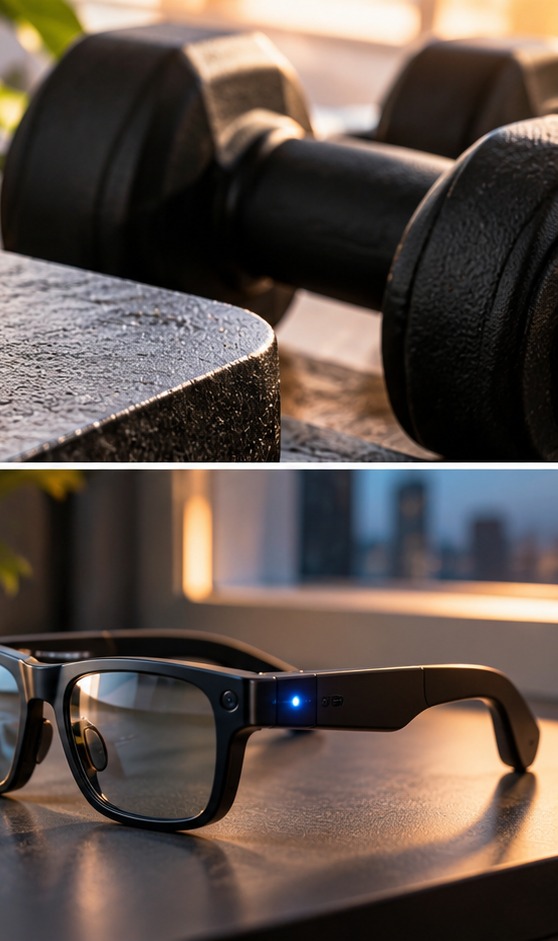
A small light or audible cue can make the difference between a technology that feels transparent and one that feels intrusive. People around the wearer need a practical way to understand when recording may be occurring. The indicator should be difficult to miss and hard for ordinary users to disable accidentally. Buyers should also check whether third-party applications can access the camera or microphone and whether the same recording rules apply across services. Privacy is not only about the person wearing the glasses. It also concerns everyone who happens to be nearby. That is why clear signalling and simple controls are important elements of responsible wearable design.
The phone connection matters too
Many AI glasses rely on a smartphone for connectivity, processing, settings or account management. That means privacy is not limited to the glasses themselves. The companion phone app can become another place where recordings, voice interactions or location information are stored. Before buying, inspect the permissions requested by the app. A product should not need broad access to unrelated parts of a phone without a clear reason. It is also worth checking what happens when the glasses are offline. If basic controls stop working without an internet connection, users should know that before relying on the device in travel or low-connectivity environments.
Where data processing happens
AI glasses can process information locally on the device, send it to a phone, or upload it to a cloud service. Each approach has different implications for speed, battery life and privacy. Local processing can limit how much personal information that needs to leave the device. Cloud processing can provide access to more powerful models but creates another point where information is transmitted and stored. Buyers should look for straightforward explanations of data retention, account controls, deletion procedures and whether conversations or images are used to improve services. A privacy policy that is technically complete but difficult to understand is still a poor user experience.
AI glasses need better social etiquette
The technology also creates questions that cannot be solved with software. Recording someone without permission can be inappropriate even when the device technically allows it. Manufacturers can help by making privacy controls easy to understand and by establishing clear social guidance. Users have a responsibility too. The fact that a device can record does not mean recording is appropriate in every environment. Workplaces, schools, medical settings, private homes and other sensitive locations may have additional rules. Before wearing camera-equipped glasses in public, users should consider local laws and the expectations of the people around them.
What to check before buying
Start with the sensors. Does the device have a camera, microphone, location capability or other environmental sensors? Next, find out how activation is shown. Then review the companion app and account settings. Can you delete recordings? Can you control cloud processing? Is there a way to disable individual features? Does the device continue to work if you refuse optional data collection? Battery life and connectivity still matter, but privacy should sit beside them on the checklist. A comfortable pair of glasses is not a good purchase if the owner is uncomfortable with how the data is handled.
Bottom line
AI glasses are moving into a more complicated phase of consumer adoption. The technical experience can be impressive, but trust will determine whether people feel comfortable wearing these devices around other people. The privacy conversation should therefore be specific. Look at cameras, microphones, activation indicators, local versus cloud processing, retention policies and deletion controls. Avoid judging a product solely by how clever its assistant appears. For buyers, the most useful question is not simply 'What can these glasses do?' It is 'What do these glasses collect, when do they collect it, and who can access it?' That question will remain important as wearable AI becomes more capable.
The best privacy control is understandable
Complex settings create the risk that users accept defaults without understanding them. A better system makes the important controls obvious: camera state, microphone state, connectivity, data sharing and deletion. Manufacturers can build trust by explaining these choices during setup rather than hiding them in a long policy document. Buyers can help themselves by reviewing those settings before wearing the glasses around other people. The category is still evolving, so today's privacy architecture may not be the final model. Software updates can change features, permissions and data practices. Keep the companion app and device firmware updated, but review major privacy changes rather than accepting them automatically.
Keep the human factor in view
Technology that sits on someone's face can change how other people perceive an interaction. Good design should make the wearer aware of that social context rather than encouraging invisible recording. That expectation should remain part of responsible ownership as the category grows. in public spaces.